Monotype Printing
Using a Gelli plate, Golden Open acrylics, charcoal, and pastel, I’ve been creating monotypes and printing them in a Stillman and Birn Nova sketchbook. It has tan paper, but I wish it were white as many of my prints are coming out darker than I prefer. Oh, well. There are a million different ways to print using a gel plate, but I find that so many options don’t work well for me. I tried a while back and gave up. Now, I’m limiting myself to using charcoal transfers as a starting place, and I’ll work more on how to be creative with the layering of paint. So far, I’ve only been doing one layer of acrylic, and my experiments with matte medium haven’t worked out that well.
My process is to first do a charcoal drawing in another sketchbook, sometimes adding pastel, then transferring the drawing to the Gelli plate by placing the 6″x6″ plate on top of the drawing. The dry media adheres quickly with pressure although it’s always lighter in the end than the original. I then use paint and a brayer to add paint to the plate. After that, I place the plate on the sketchbook page or put the page on the plate, use my makeshift baren (which is a round, smooth, plastic piece that goes under furniture legs when you need to push them across the floor). I then weight it down for a few minutes and, when dry, pull the print, the most exciting part.


Here are those steps with the charcoal drawing of tea roses, the drawing being transferred to the plate, the plate on the sketchbook after I added some pastel and the acrylic paint was applied (I forgot to take that picture, but it’s a fun step and the charcoal doesn’t budge), and finally, after drying, the result. This is one of my favorites, and it was the only time I felt a bit sad when the charcoal drawing was demolished from the process.
Monotypes differ from prints because they are a “one and done” process. You create the image on a smooth surface which is used up after the pull. However, a few times I’ve reused the same drawing by reapplying charcoal to it. It’s not quite the same, but it’s close.
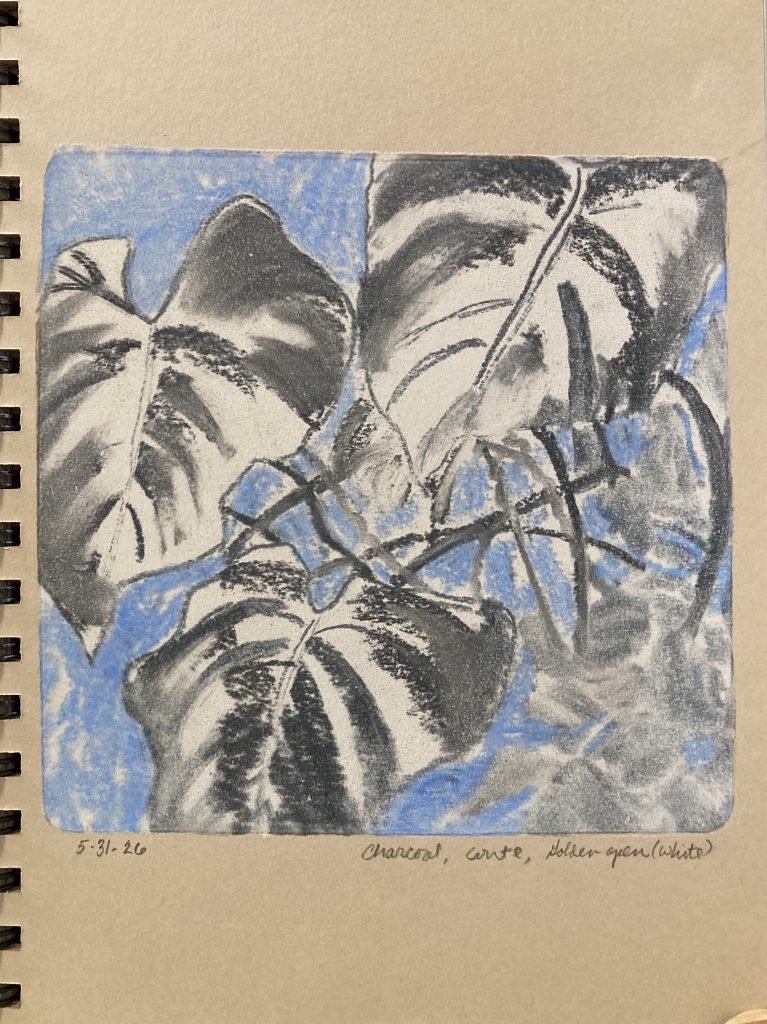
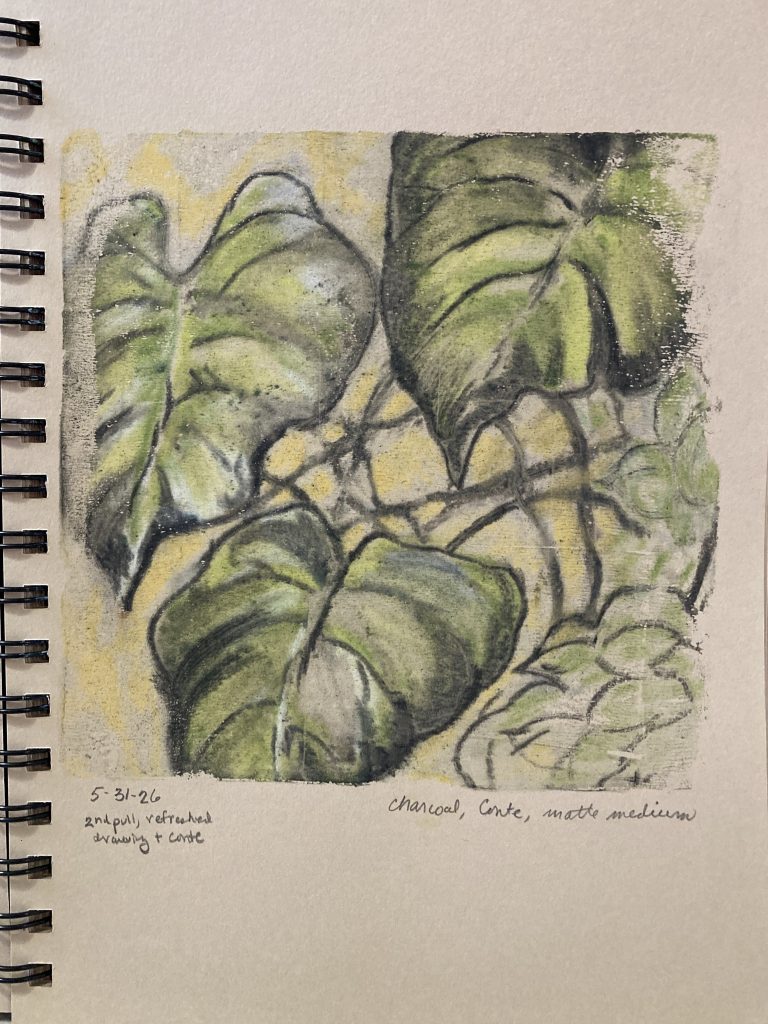
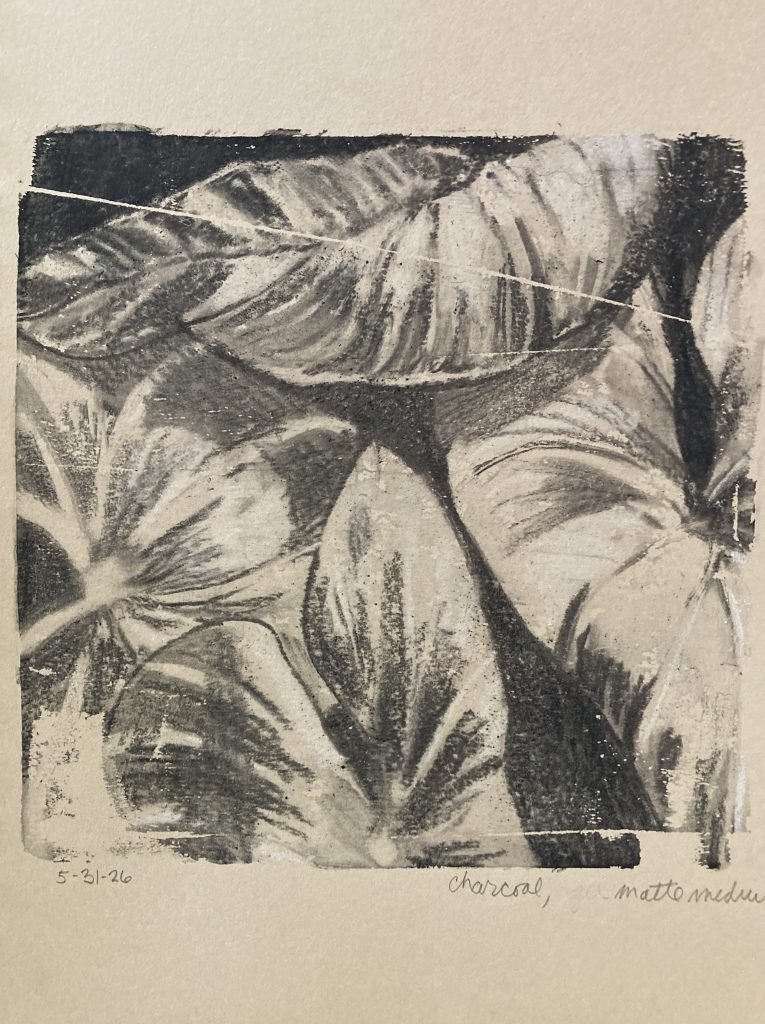
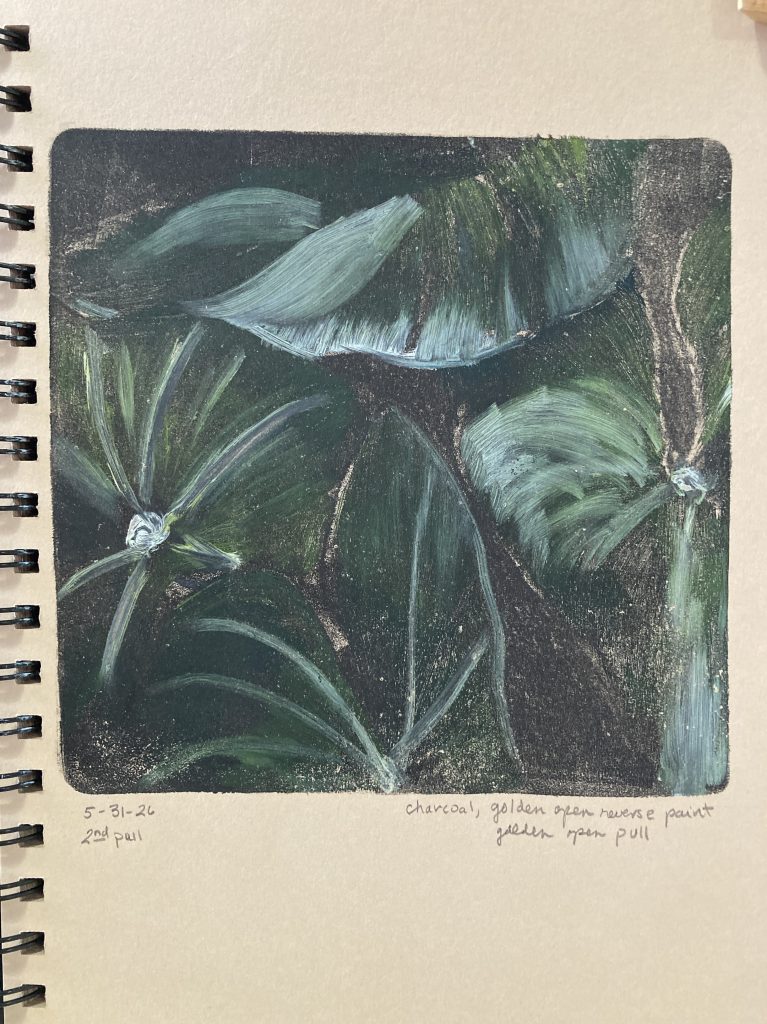
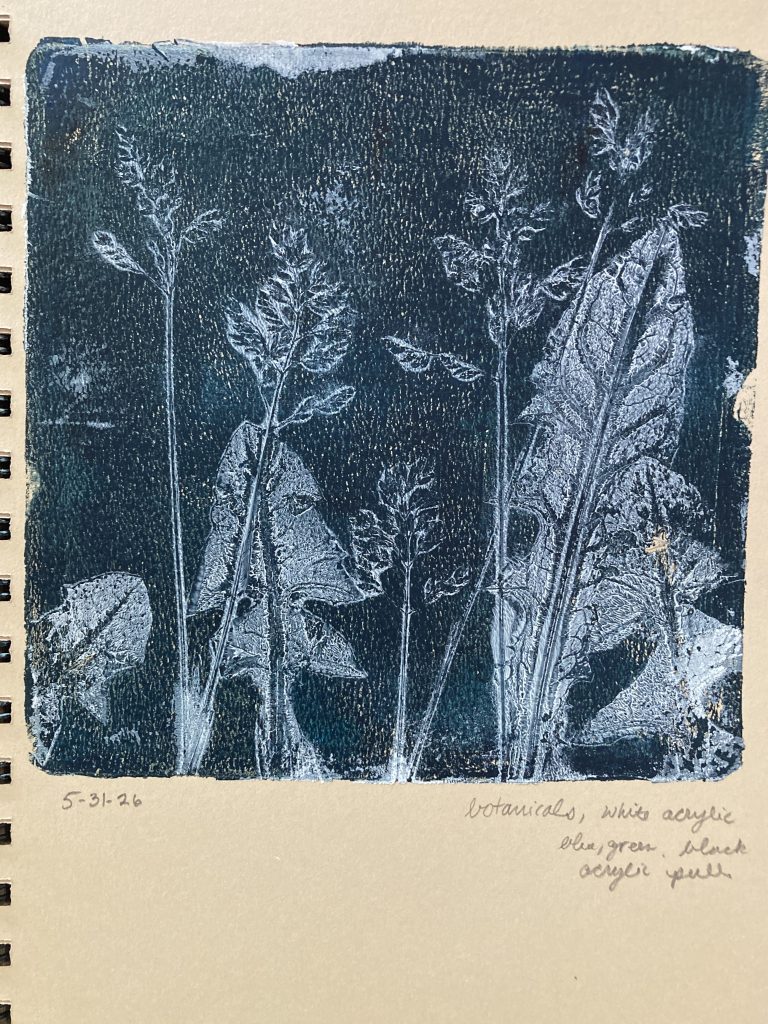
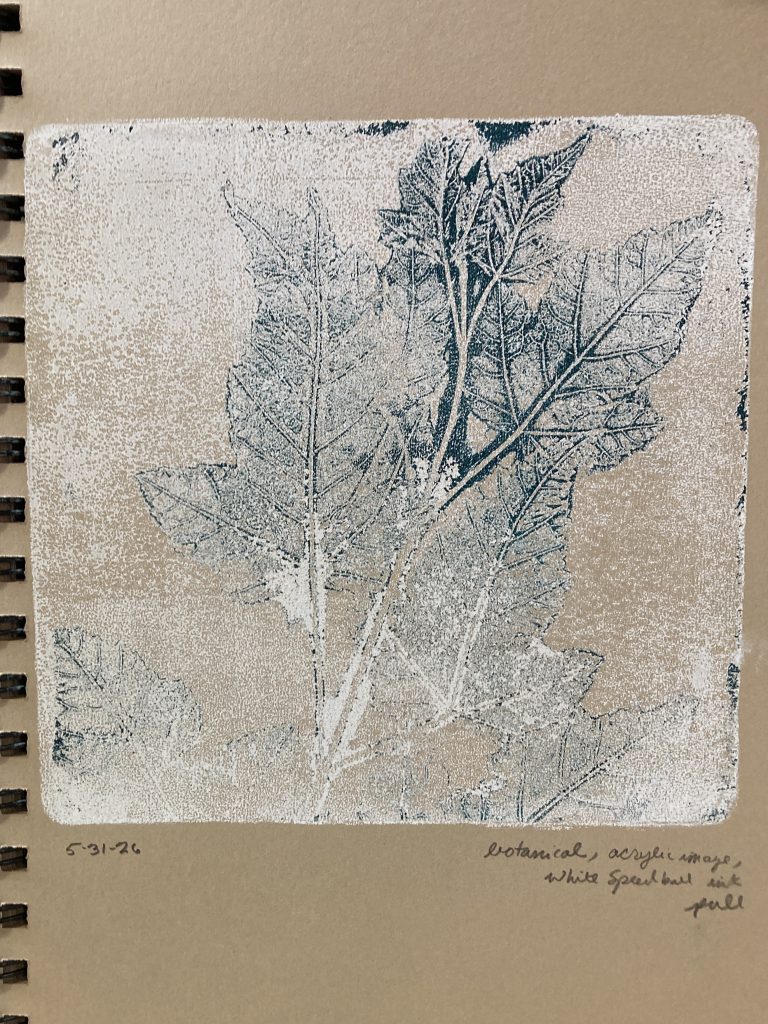
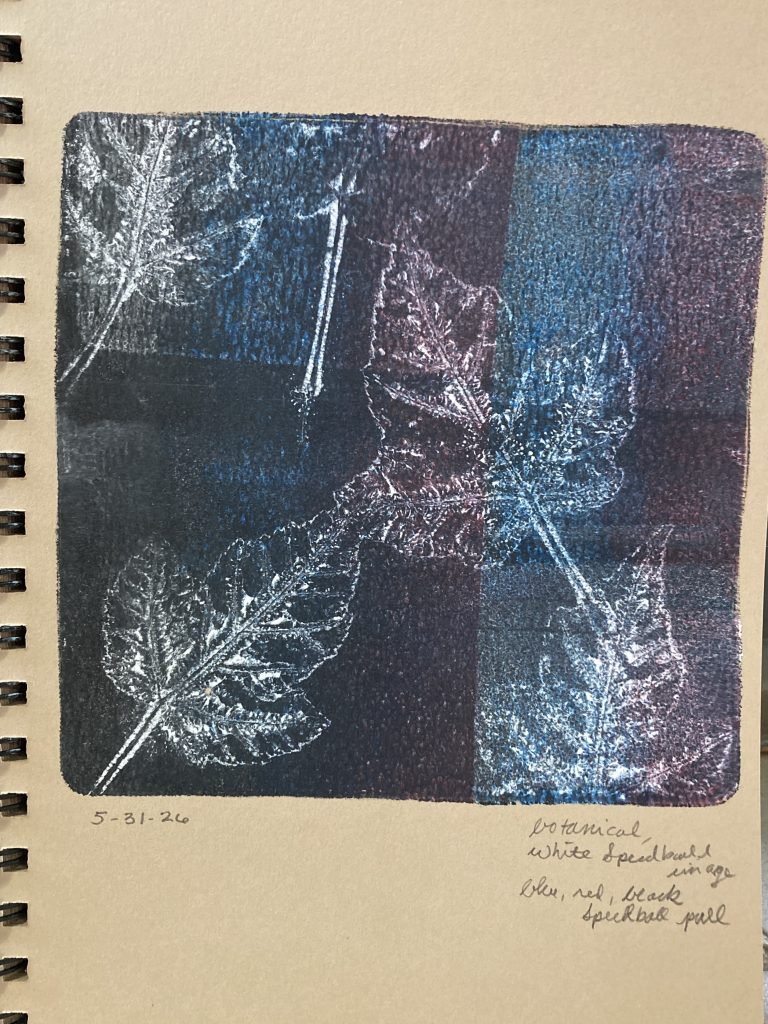
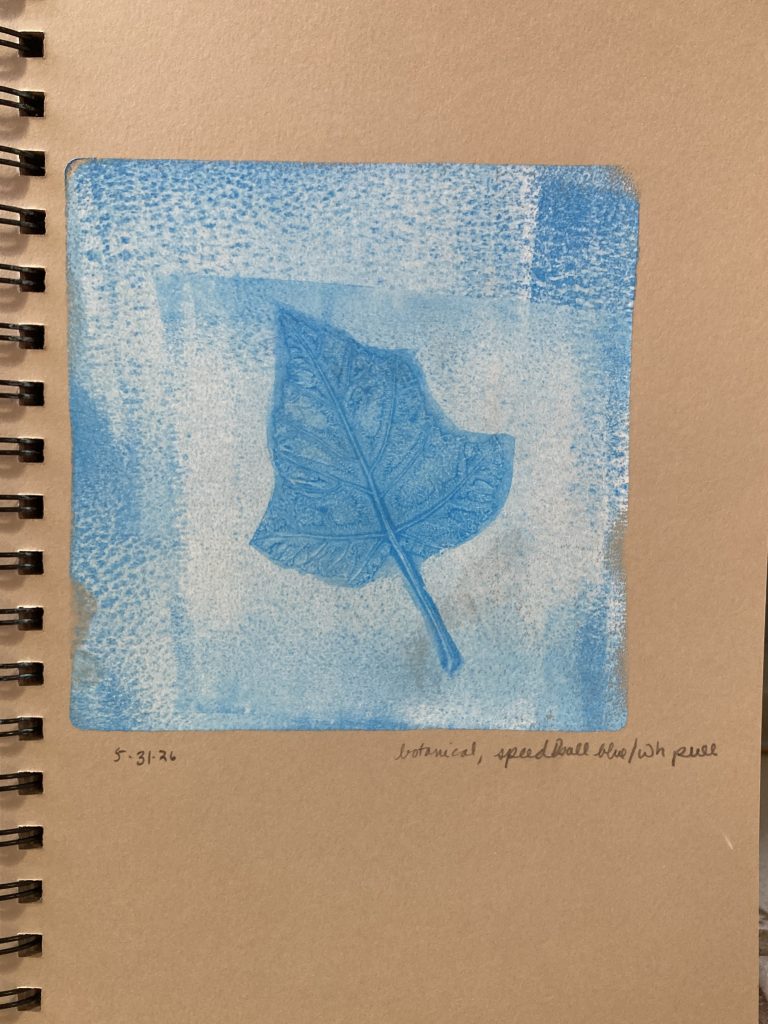
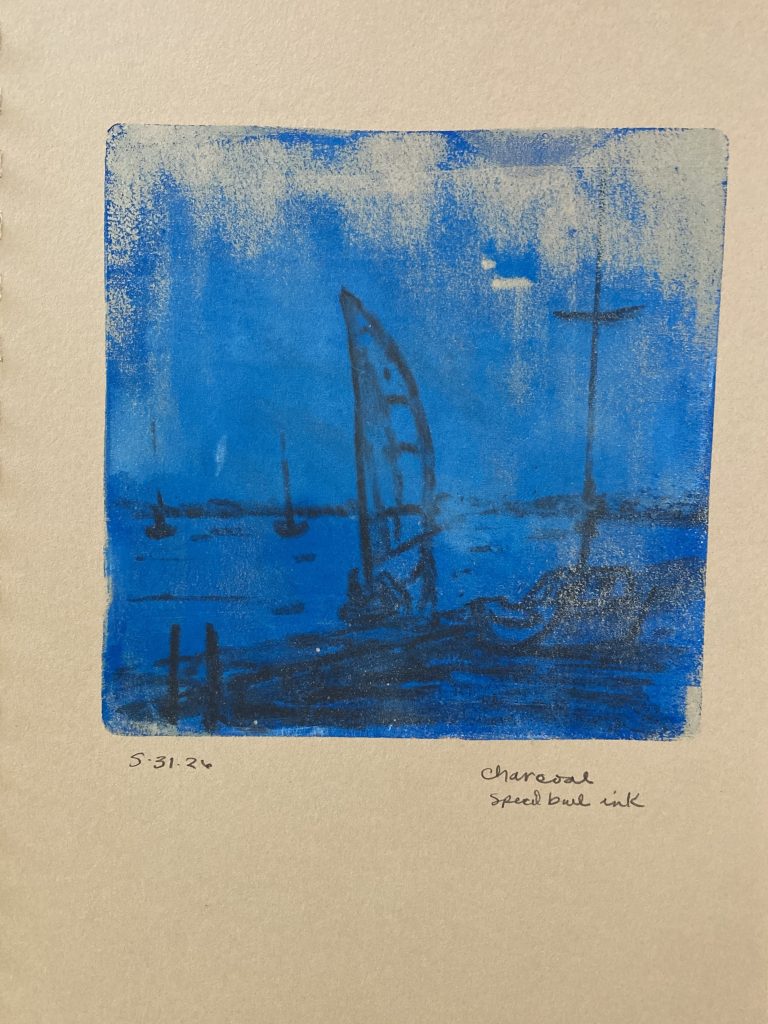
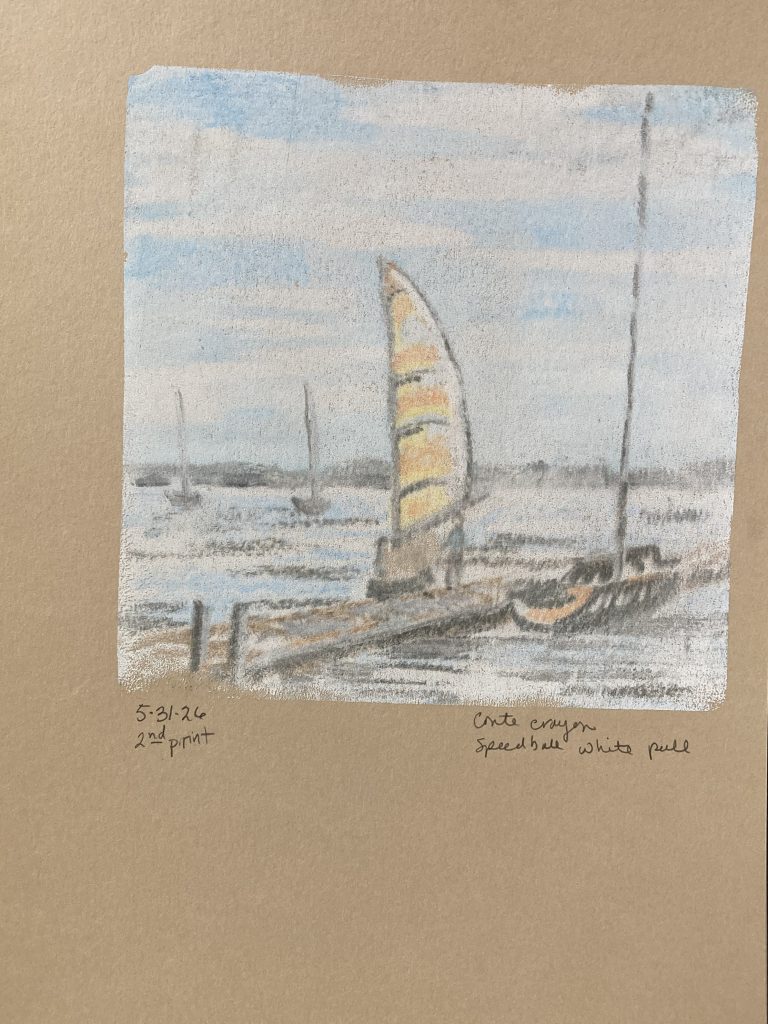
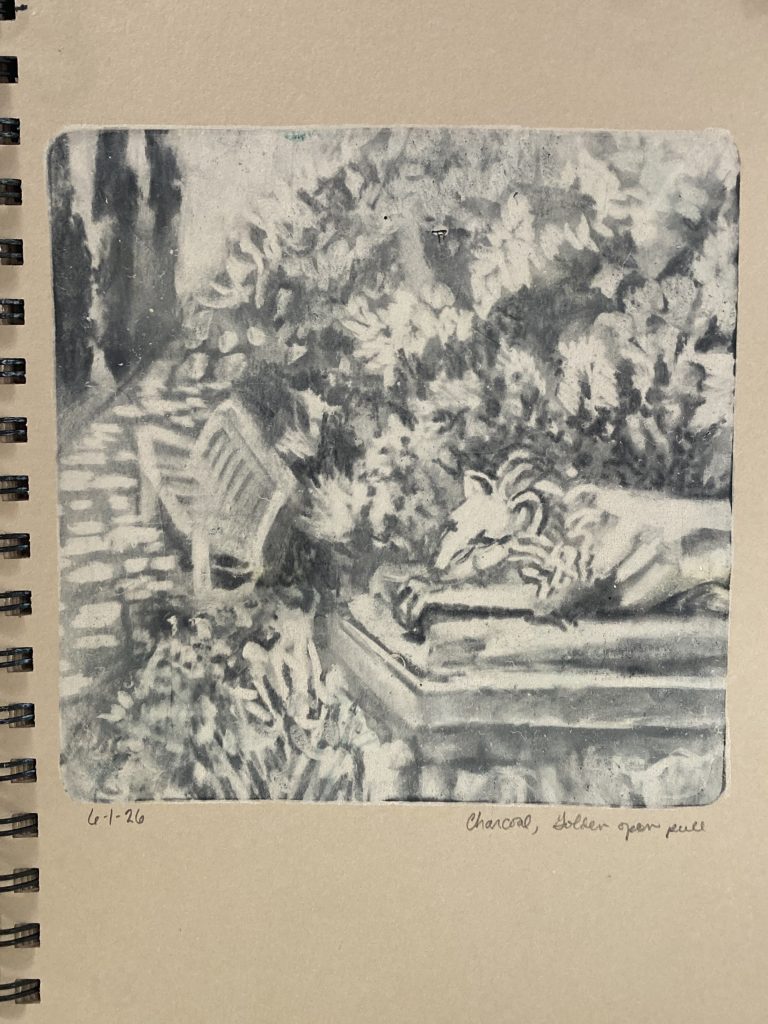
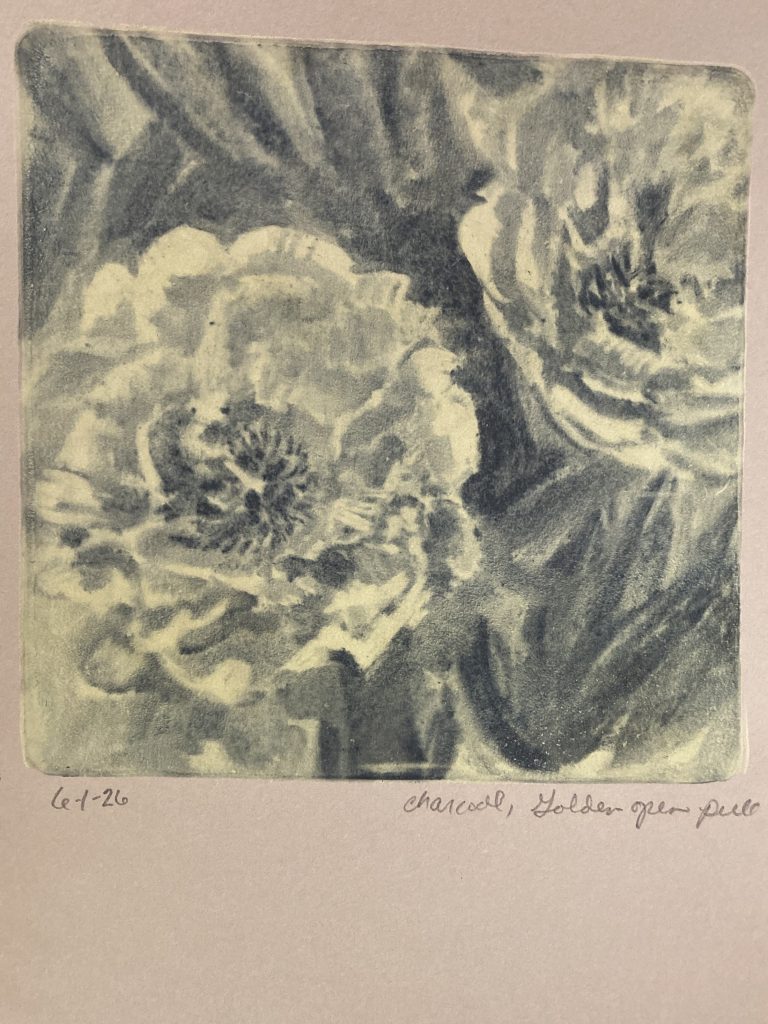
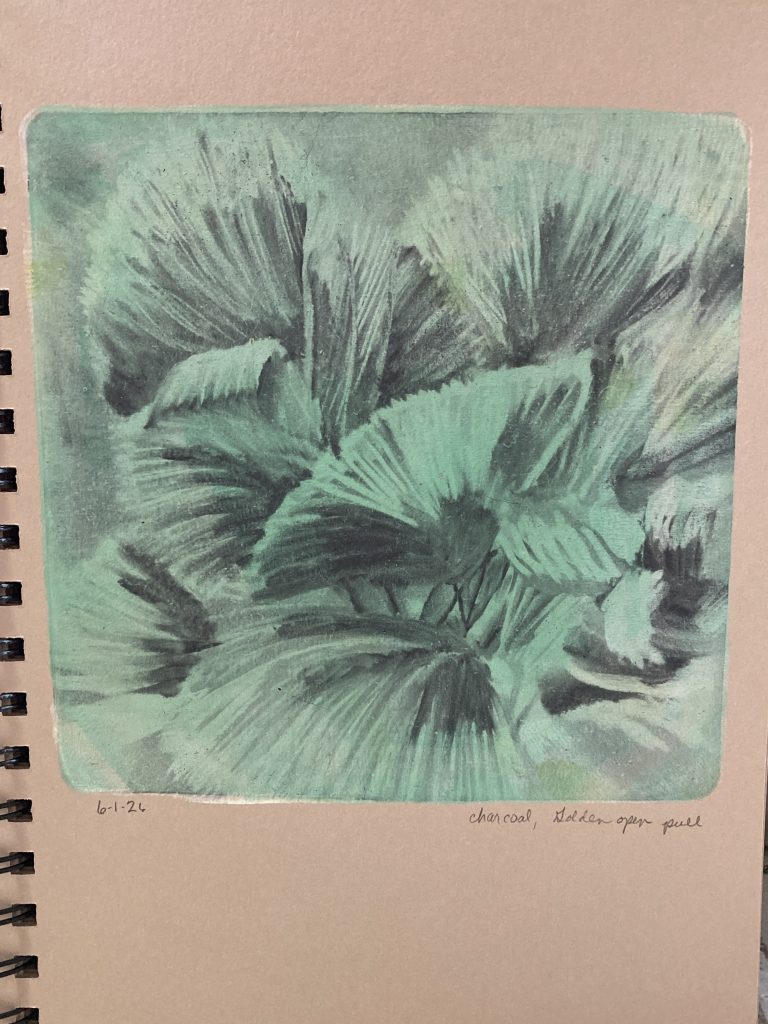
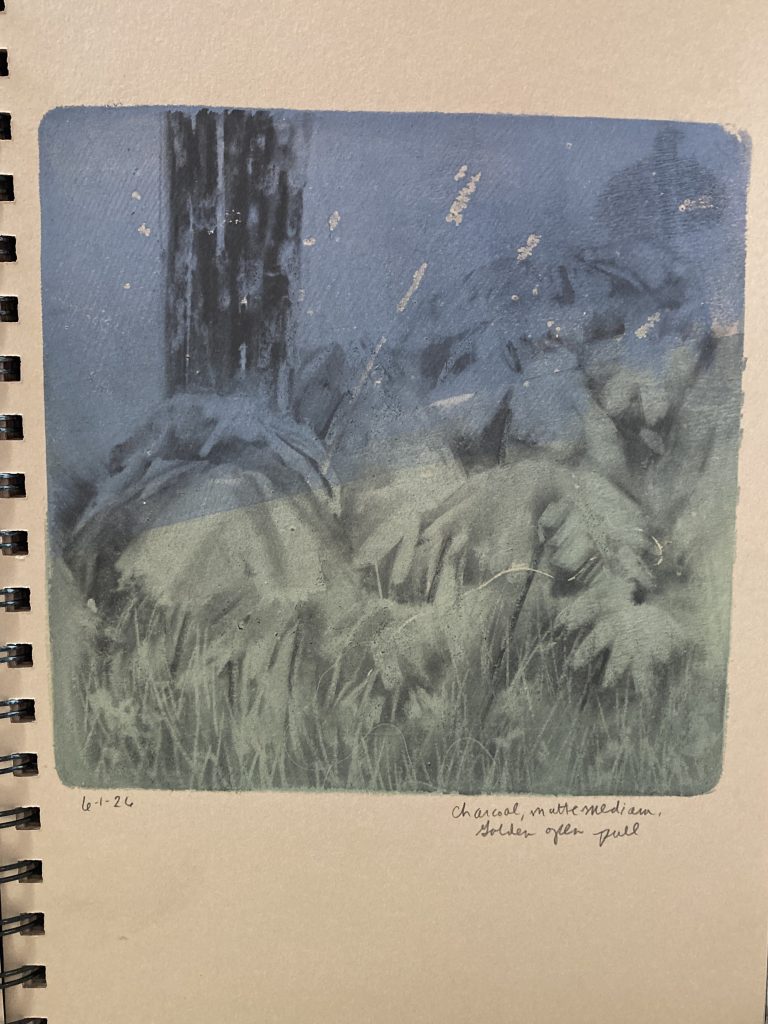
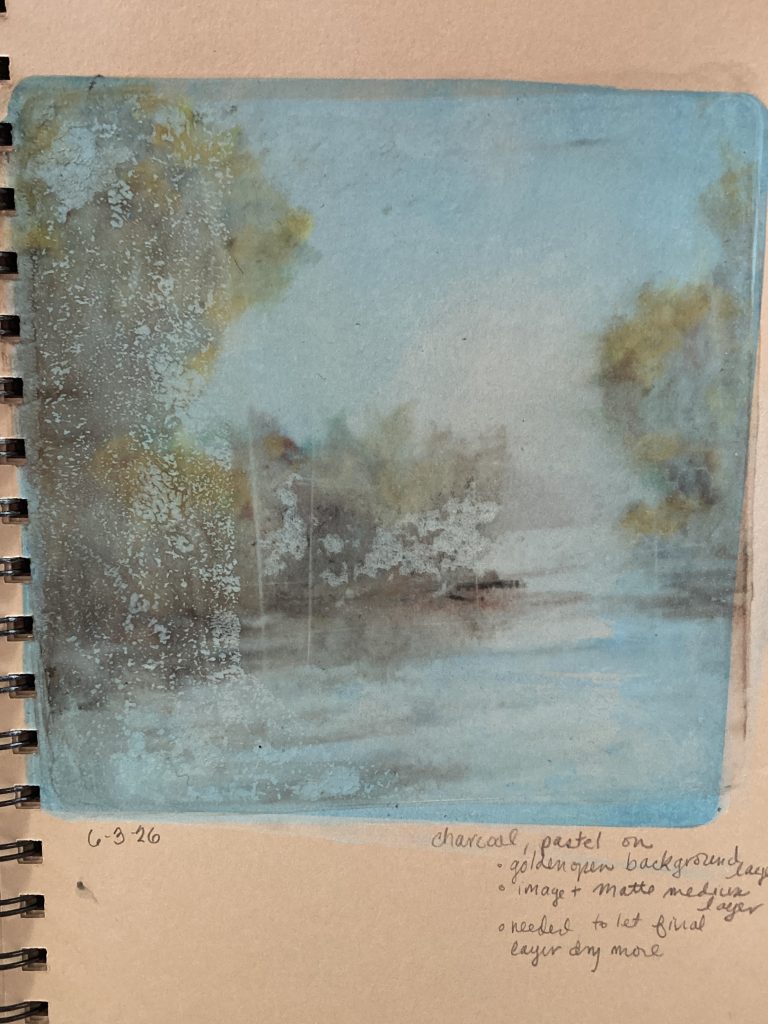
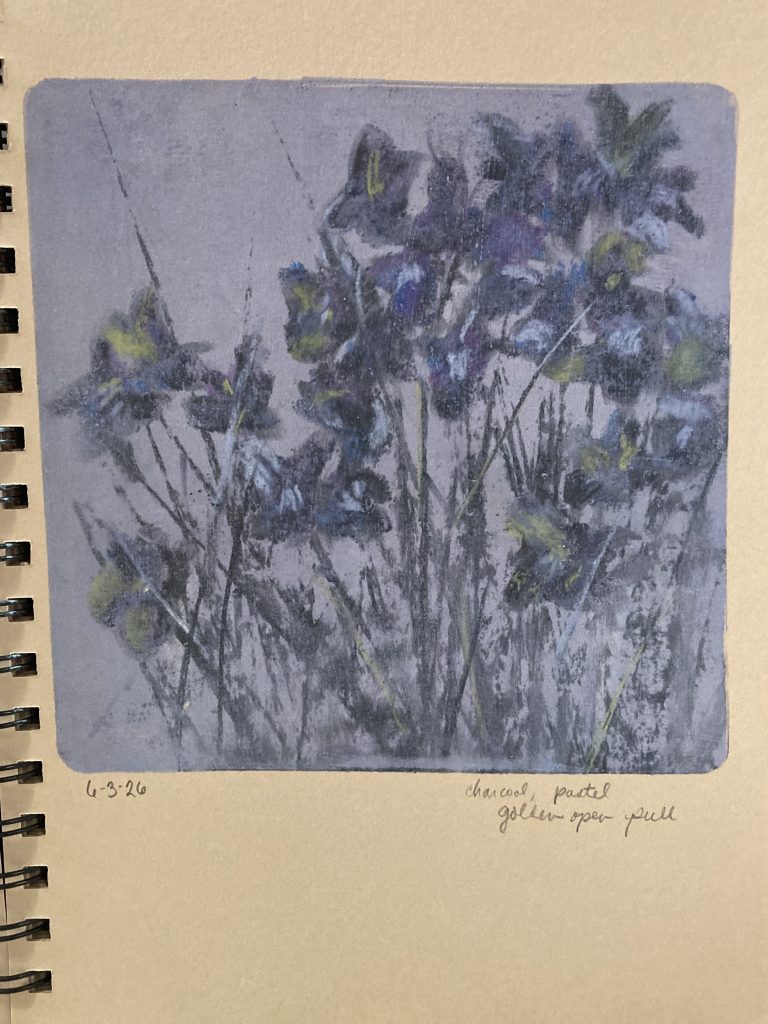
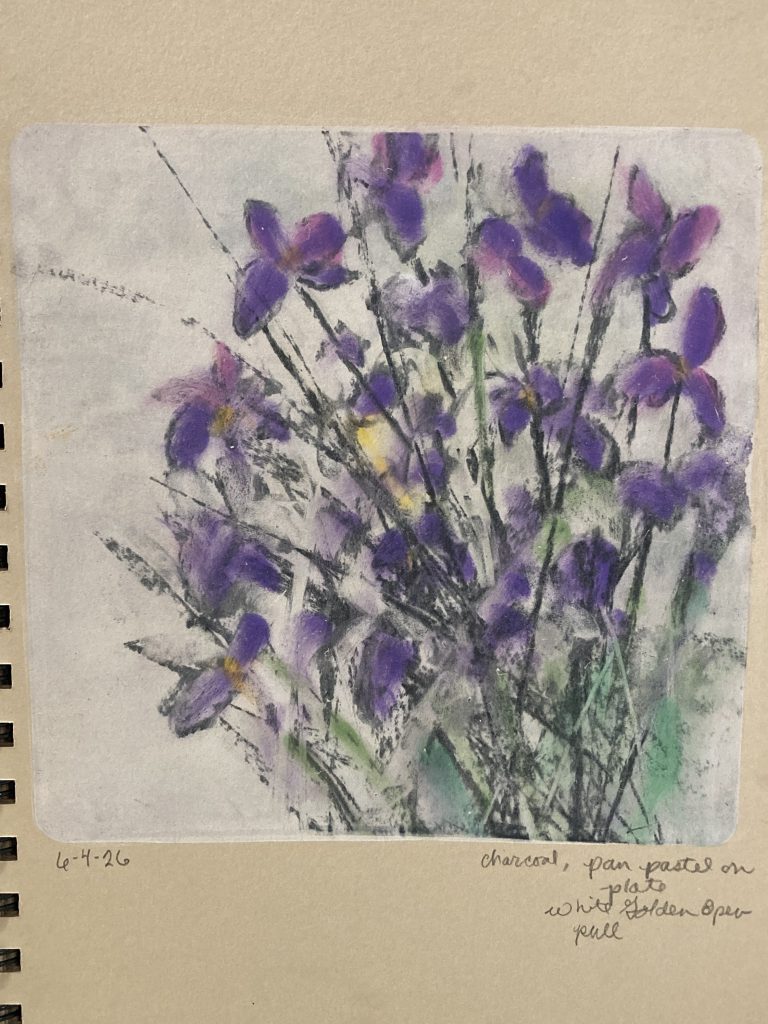
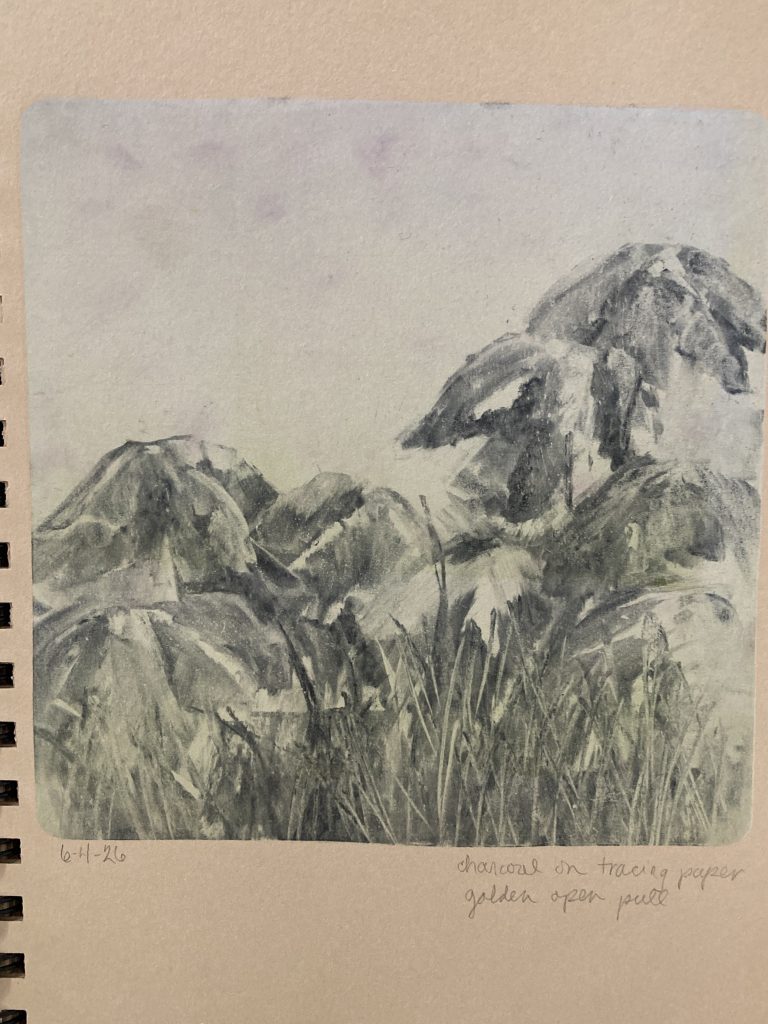
I’ve become kind of fascinated with how a monotype changes a drawing into something that I wouldn’t have created on my own. Also, by using the paint, it stops smearing and makes it an acrylic painting, so that’s convenient.
Leave a Reply